
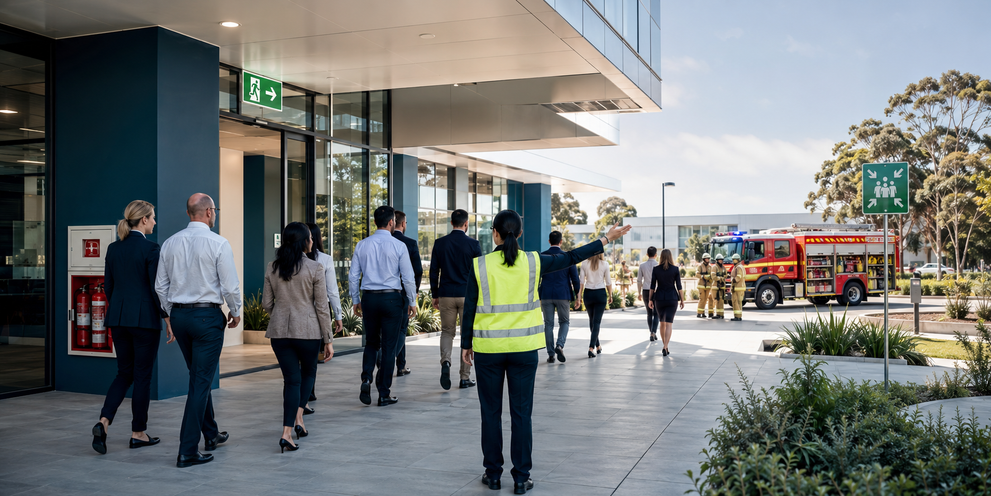
A fire alarm rarely gives you a second chance to think it through. It goes off, people freeze for a moment, and then the next sixty seconds decide how the rest of the day goes. That gap between the alarm sounding and people actually moving is where fire safety training earns its keep.
Every year, Australian workplaces deal with fire incidents ranging from a smouldering electrical fault in a server room to full-scale evacuations of high-rise office towers. Some of these end with everyone walking out calmly. Others end in chaos, confusion, or worse. The difference almost always comes down to preparation, not luck.
This article looks at what workplace fire safety and emergency evacuation training actually involves, why it matters legally and practically, and how businesses across Australia — and globally — are approaching it in 2026.
Why Fire Safety Training Isn't Optional Anymore

There's a common misconception that fire safety is something only high-risk industries like manufacturing or construction need to worry about. That's outdated thinking.
Office towers, retail centres, warehouses, schools, aged care facilities, and even small co-working spaces all carry fire risk. Electrical faults, overloaded power boards, poor housekeeping around flammable materials, and even lithium-ion battery storage have all become recurring causes of workplace fire incidents in recent years.
In Australia, the framework for managing this risk sits within the model Work Health and Safety (WHS) laws, which require employers — referred to as a "person conducting a business or undertaking" or PCBU — to ensure workers and visitors are protected from foreseeable risks, including fire. Safe Work Australia publishes guidance and codes of practice that reference emergency planning as a core WHS obligation, and non-compliance isn't just a paperwork issue. It can mean real penalties if an incident occurs and a business can't demonstrate it took reasonably practicable steps to prepare its people.
The Standard Behind the Requirement
Most Australian workplaces build their emergency plans around AS 3745 – Planning for Emergencies in Facilities, the Australian Standard that outlines how an Emergency Control Organisation (ECO) should be structured, trained, and tested. While AS 3745 isn't law in itself, it's referenced within WHS codes of practice, which means courts can and do treat it as the benchmark for what a "reasonably practicable" fire safety response looks like.
The standard calls for at least one full evacuation exercise every 12 months, documented training for wardens and chief wardens, and a maintained emergency plan that reflects the actual layout and risks of the facility — not a generic template pulled off the internet three years ago.
What Good Fire Safety Training Actually Covers
Fire safety training that ticks a box and fire safety training that actually works are two very different things. A rushed toolbox talk once a year rarely translates into calm, coordinated behaviour when the alarm genuinely goes off.
Effective training programs generally cover:
-
Recognising fire hazards specific to the workplace, correct use of fire extinguishers and fire blankets, and understanding the different classes of fire.
-
Evacuation procedures including assembly points, warden roles, communication protocols, and provisions for staff or visitors who may need extra assistance evacuating.
Beyond these two areas, training should also build muscle memory. Reading a procedure document is not the same as physically walking the evacuation route, locating the nearest exit from your desk, and knowing who to listen for during an emergency.
A Quick Scenario Worth Thinking About
A mid-sized logistics company in Melbourne had a warehouse fire start from a forklift battery charging station left unattended overnight. The alarm triggered during a shift change, a chaotic time with contractors, delivery drivers, and staff all on site.
Because the site had run a proper evacuation drill only two months earlier, the chief warden knew exactly which zones to check, floor wardens directed people to alternate exits when the main one was blocked by smoke, and everyone was accounted for at the assembly point within four minutes. No one was seriously hurt.
Compare that to workplaces where staff have never physically practised an evacuation. In those cases, even minor incidents tend to produce confusion — people going back for belongings, wardens unsure of their role, and assembly points that nobody actually goes to. The difference isn't intelligence or common sense. It's rehearsal.
Fire Safety Isn't Just an Australian Conversation
While this article focuses heavily on the Australian regulatory landscape, workplace fire safety is a global priority. Internationally recognised bodies such as the National Fire Protection Association (NFPA) in the United States and fire safety divisions under the UK's Health and Safety Executive set out comparable expectations: risk assessments, trained fire wardens, regular drills, and clear evacuation procedures.
The core principles rarely change from country to country. What differs is the specific legislation, the standards referenced, and how compliance is enforced. Businesses operating across borders — say, an Australian company with a UK or Southeast Asian office — often find it useful to align with the strictest applicable standard rather than trying to run separate systems for each location.
Building an Emergency Control Organization (ECO)

For many businesses, the biggest gap isn't a lack of intention — it's not knowing where to start when it comes to structuring an emergency response team.
Under AS 3745, an ECO typically includes a Chief Warden, one or more Deputy Chief Wardens, Floor or Area Wardens, and a Communications Officer for larger sites. Each role carries specific responsibilities during an emergency, from directing evacuation flow to liaising with emergency services on arrival.
Common Weak Points in ECOs
Organizations delivering AS 3745-based training across Australian facilities consistently report a few recurring issues:
-
Warden teams that have lapsed training or too few trained members to provide coverage across shifts, leave, and turnover.
-
Emergency plans that were written once, filed away, and never updated after office layout changes, staff growth, or new hazards being introduced.
Both issues sound minor until an actual emergency exposes them. A warden who left the company eight months ago and was never replaced isn't going to magically appear when the alarm sounds.
Practical Steps for Employers
Getting fire safety training right doesn't require reinventing the wheel. It requires consistency and a genuine commitment to keeping the plan current.
A sensible starting point looks like this:
-
Review your current emergency plan against AS 3745 requirements, checking it reflects your actual building layout and current staff.
-
Identify and train enough wardens to provide coverage across all shifts, including casual and part-time staff where relevant.
-
Schedule at least one full evacuation exercise annually, and treat the debrief afterward as seriously as the drill itself.
-
Keep training records up to date, since documentation is often what separates genuine compliance from a plan that only exists on paper.
None of this needs to be complicated, but it does need to be deliberate. Fire safety training that happens once during onboarding and is never revisited tends to fade from memory exactly when it's needed most.
Where Formal Training Comes In
This is where structured, purpose-built training becomes genuinely valuable rather than a compliance checkbox. A well-designed program doesn't just explain what AS 3745 requires — it walks participants through realistic scenarios, clarifies warden responsibilities, and builds the kind of confidence that only comes from practising a response before it's needed for real.
The Fire Safety and Emergency Evacuation Training course from Australian Compliance Training has been built around exactly this gap. It covers fire hazard recognition, extinguisher use, evacuation procedures, warden responsibilities, and the practical steps needed to keep a workplace prepared and compliant year-round.
If your business hasn't reviewed its fire safety training in the last twelve months, or if new staff have joined without formal induction on evacuation procedures, it's worth looking into properly. You can explore the course here: Fire Safety and Emergency Evacuation Training – Australian Compliance Training.
Getting your team trained isn't just about meeting a legal obligation. It's about making sure that when the alarm does go off, everyone in the building knows exactly what to do without needing to think twice.
Keeping Training Alive, Not Just Completed
A certificate on file doesn't evacuate a building. What actually helps is a workplace culture where fire safety is discussed casually, not just during annual drills. Simple habits go a long way:
-
Mentioning evacuation routes during new site inductions, not just in a handbook nobody reads.
-
Running short, informal refreshers when office layouts change or new equipment is introduced.
Some of the most fire-prepared organisations aren't the ones with the thickest emergency plan documents. They're the ones where staff can genuinely answer "what would you do right now if the alarm went off?" without hesitation.
Final Thoughts
Fire safety training sits in that category of workplace investment that feels unnecessary right up until the moment it isn't. Nobody plans for a fire, which is exactly why planning has to happen in advance.
Whether you're managing a small office, a warehouse, or a multi-tenant commercial building, the principles stay the same: know your risks, train your people properly, rehearse the plan, and keep it current. According to industry reports, workplaces with regularly rehearsed evacuation procedures consistently report faster, calmer responses during real incidents compared to those relying on outdated or theoretical plans.
Fire safety isn't a one-off task to complete and forget. It's an ongoing responsibility — and one that's far easier to manage with the right training behind it.


