
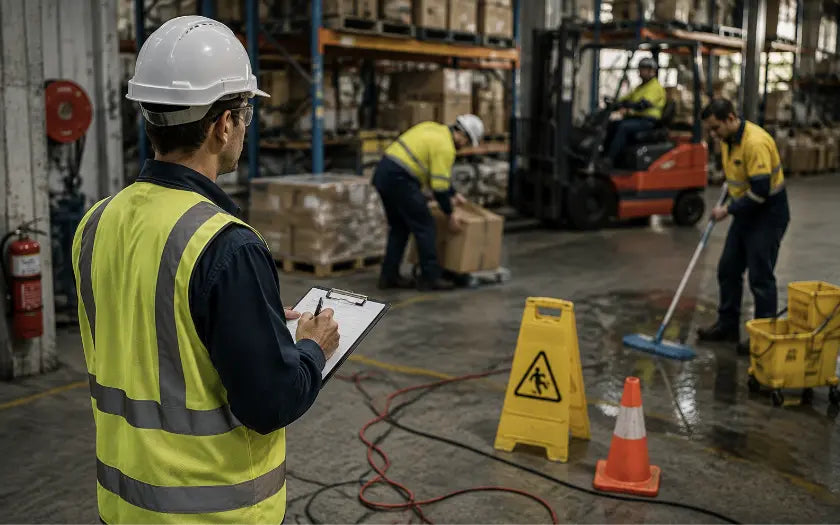
Every workplace has hazards, regardless of whether it's a construction site, office, warehouse, healthcare facility, retail store, or hospitality venue. While some risks are obvious—such as working at heights or operating heavy machinery—others are less visible but can be just as harmful, including poor ergonomics, workplace stress, and fatigue.
Understanding workplace hazards is the first step towards preventing injuries, protecting employees, and meeting legal obligations. In Australia, employers have a duty under Work Health and Safety (WHS) laws to provide a safe working environment, while employees also have responsibilities to work safely and report hazards.
In this guide, we'll explore the most common workplace hazards, why they matter, and practical ways to reduce the risks.
What Is a Workplace Hazard?
A workplace hazard is anything that has the potential to cause injury, illness, property damage, or harm to the environment. Hazards may be physical objects, work processes, chemicals, equipment, environmental conditions, or even workplace behaviours.
Not every hazard will result in an incident, but if hazards are left unmanaged, the likelihood of accidents increases significantly.
1. Slips, Trips, and Falls
Slips, trips, and falls remain one of the leading causes of workplace injuries across Australia. They can occur in almost any industry and often result in sprains, fractures, head injuries, and lost work time.
Common causes include:
-
Wet or slippery floors
-
Loose electrical cables
-
Uneven flooring
-
Poor housekeeping
-
Inadequate lighting
-
Cluttered walkways
How to reduce the risk
-
Keep walkways clear.
-
Clean spills immediately.
-
Use non-slip flooring where appropriate.
-
Improve lighting in work areas.
-
Encourage employees to report hazards promptly.
2. Manual Handling Injuries
Manual handling involves lifting, pushing, pulling, carrying, holding, or moving objects. Poor manual handling techniques can lead to musculoskeletal disorders, particularly back, shoulder, neck, and knee injuries.
Examples include:
-
Repetitive lifting
-
Carrying heavy loads
-
Poor lifting posture
-
Reaching above shoulder height
-
Frequent twisting movements
Risk reduction strategies
-
Provide manual handling training.
-
Use mechanical lifting equipment where possible.
-
Design workstations to minimise awkward movements.
-
Encourage team lifting for heavy items.
3. Psychosocial Hazards
Psychosocial hazards have become a major focus of workplace health and safety in Australia. These hazards affect employees' psychological health and can contribute to stress, anxiety, burnout, depression, and reduced productivity.
Examples include:
-
Excessive workloads
-
Workplace bullying
-
Sexual harassment
-
Poor leadership
-
Low job control
-
Role ambiguity
-
Occupational violence
-
Fatigue
Managing psychosocial risks is now considered an important part of workplace safety, not simply an HR issue.
4. Poor Ergonomics
Office workers and remote employees are particularly vulnerable to ergonomic hazards.
Poor workstation design can contribute to:
-
Neck pain
-
Shoulder pain
-
Eye strain
-
Back injuries
-
Repetitive strain injuries (RSI)
Simple improvements such as adjusting chair height, positioning monitors correctly, and taking regular breaks can significantly reduce these risks.
5. Electrical Hazards

Electricity is essential in almost every workplace, but damaged equipment or unsafe practices can lead to electric shock, burns, fires, or fatalities.
Examples include:
-
Damaged extension leads
-
Faulty electrical equipment
-
Overloaded power boards
-
Exposed wiring
-
Poor maintenance
Employers should regularly inspect electrical equipment and remove defective items from service immediately.
6. Chemical Hazards
Many workplaces use chemicals for cleaning, manufacturing, healthcare, agriculture, or maintenance.
Potential risks include:
-
Skin irritation
-
Chemical burns
-
Respiratory illness
-
Poisoning
-
Fire or explosion
Risk controls include:
-
Safe storage
-
Appropriate labelling
-
Safety Data Sheets (SDS)
-
Personal protective equipment (PPE)
-
Employee training
7. Biological Hazards
Healthcare, aged care, childcare, laboratories, and food industries often face biological hazards.
Examples include:
-
Bacteria
-
Viruses
-
Bloodborne pathogens
-
Mould
-
Contaminated waste
Proper hygiene, vaccination programs, infection prevention procedures, and PPE help minimise these risks.
8. Machinery and Equipment Hazards
Moving machinery presents significant risks when safeguards are missing or equipment is poorly maintained.
Potential injuries include:
-
Crushing
-
Amputation
-
Cuts
-
Entanglement
-
Eye injuries
Employers should ensure machinery is properly guarded, regularly inspected, and operated only by trained personnel.
9. Noise and Vibration
Long-term exposure to excessive noise can result in permanent hearing loss.
High-risk industries include:
-
Construction
-
Manufacturing
-
Mining
-
Aviation
-
Transport
Control measures include:
-
Engineering controls
-
Noise monitoring
-
Hearing protection
-
Equipment maintenance
10. Fire and Emergency Hazards

Every workplace should prepare for emergencies, including fires, gas leaks, severe weather events, and medical emergencies.
Essential emergency planning includes:
-
Fire extinguishers
-
Emergency exits
-
Evacuation procedures
-
Assembly areas
-
Fire wardens
-
Regular emergency drills
Preparation helps minimise injuries and ensures everyone knows how to respond during an emergency.
The Importance of Hazard Identification
Hazards cannot be controlled if they are not identified.
Regular workplace inspections help businesses identify:
-
Unsafe equipment
-
Unsafe work practices
-
Environmental risks
-
Maintenance issues
-
Emerging psychosocial hazards
Employees should also be encouraged to report hazards and near misses, as these reports provide valuable opportunities to prevent future incidents.
How to Control Workplace Hazards
Australian workplaces commonly use the Hierarchy of Controls to manage risks. This approach prioritises the most effective control measures:
-
Eliminate the hazard.
-
Substitute the hazard with a safer alternative.
-
Isolate the hazard.
-
Use engineering controls.
-
Implement administrative controls.
-
Use personal protective equipment (PPE).
The higher the control sits in the hierarchy, the more effective it is likely to be.
Why Workplace Safety Matters
A safe workplace benefits everyone.
For employees, it reduces the likelihood of injuries, illness, stress, and lost income.
For employers, it can lead to:
-
Fewer workplace incidents
-
Lower workers' compensation costs
-
Improved productivity
-
Better employee morale
-
Stronger legal compliance
-
Enhanced business reputation
Investing in workplace safety is not only a legal obligation—it also supports long-term organisational success.
Final Thoughts
Workplace hazards exist in every industry, but many incidents are preventable through proactive risk management, employee engagement, and ongoing safety education. From slips and manual handling injuries to psychosocial risks and electrical hazards, understanding what can go wrong is the first step toward creating a healthier and safer workplace.
Regular hazard identification, effective risk controls, and continuous training help businesses protect their people while meeting their obligations under Australian work health and safety laws.
For organisations looking to strengthen their workplace safety culture, investing in practical WHS training can equip employees and managers with the knowledge and confidence to recognise hazards, assess risks, and respond appropriately before incidents occur.
Helpful Resources
-
Safe Work Australia – Hazard Management: https://www.safeworkaustralia.gov.au/
-
Model Code of Practice: How to Manage Work Health and Safety Risks: https://www.safeworkaustralia.gov.au/doc/model-code-practice-how-manage-work-health-and-safety-risks
-
Australian Compliance Training – Workplace Health & Safety Courses: https://australiancompliancetraining.com.au/collections/workplace-health-and-safety


