
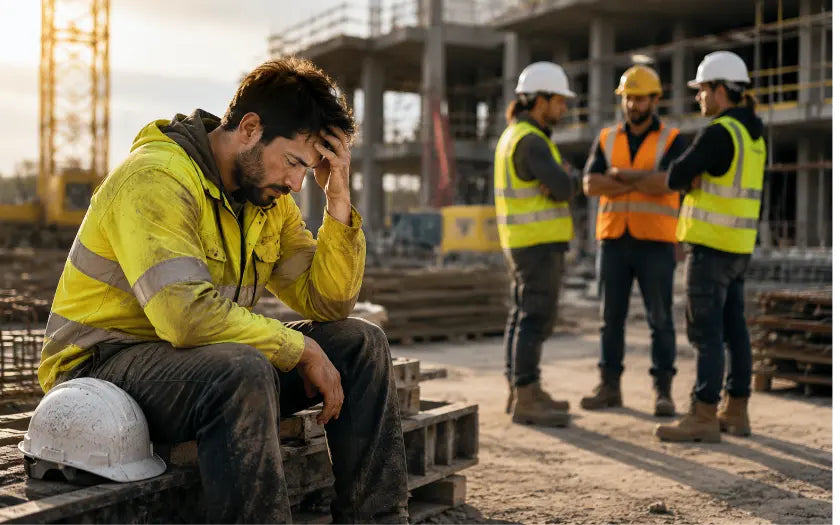
The construction industry is one of Australia's most physically demanding sectors. While organisations have traditionally focused on physical safety risks such as falls, machinery incidents, and hazardous materials, increasing attention is now being given to mental health and psychosocial hazards in the workplace.
Long working hours, high-pressure deadlines, workforce shortages, remote worksites, and challenging project environments can all impact the psychological wellbeing of workers. These factors not only affect individual employees but can also influence productivity, safety outcomes, staff retention, and overall business performance.
Understanding psychosocial hazards is becoming an essential part of creating safer and healthier construction workplaces.
What Are Psychosocial Hazards?
 Psychosocial hazards are aspects of work that can cause psychological or physical harm. They arise from how work is designed, organised, managed, and the social environment in which employees operate.
According to guidance from Australia's workplace safety regulators, psychosocial hazards can contribute to stress, anxiety, burnout, depression, and other mental health challenges when not properly managed.
In construction environments, these hazards often develop gradually and may not be immediately visible.
Common Psychosocial Hazards in Construction
High Workloads and Tight Deadlines
Construction projects frequently operate under strict timelines. Workers may experience pressure to complete tasks quickly while maintaining quality and safety standards.
Over time, excessive workloads can lead to fatigue, stress, and reduced concentration.
Long Working Hours
Extended shifts, overtime, and weekend work can impact work-life balance and recovery time.
When workers do not have adequate opportunities to rest, both mental wellbeing and physical safety can be affected.
Workplace Conflict
Disagreements between teams, supervisors, contractors, or subcontractors can create stressful work environments.
Poor communication and unresolved conflicts may contribute to psychological distress and reduced team cohesion.
Bullying and Harassment
Construction workplaces can sometimes experience negative workplace behaviours, including bullying, intimidation, or harassment.
These behaviours can significantly affect employee wellbeing and may increase absenteeism and staff turnover.
Job Insecurity
Many construction workers move between projects or work on fixed-term contracts.
Uncertainty about future employment can create ongoing stress and anxiety for workers and their families.
Why Mental Health Matters in Construction
Mental health is closely connected to workplace safety.
When workers experience high levels of stress, fatigue, or psychological distress, they may be more likely to:
-
Miss safety procedures
-
Make errors in judgement
-
Experience reduced concentration
-
Have slower reaction times
-
Become disengaged from workplace safety initiatives
For employers, addressing mental health concerns is not only about supporting employees—it is also about improving organisational performance and reducing workplace risks.
Signs Your Team May Be Experiencing Psychosocial Risks
Managers and supervisors should remain alert to potential warning signs.
These may include:
-
Increased absenteeism
-
Reduced productivity
-
Higher staff turnover
-
Workplace conflicts
-
Changes in employee behaviour
-
Increased safety incidents
-
Reports of excessive stress or fatigue
Early identification can help organisations intervene before problems escalate.
Practical Strategies to Reduce Psychosocial Hazards
 Promote Open Communication
Workers should feel comfortable discussing concerns without fear of negative consequences.
Regular toolbox talks, team meetings, and wellbeing discussions can encourage open communication.
Manage Workloads Effectively
Project schedules should be realistic and achievable.
Employers can help reduce pressure by allocating resources appropriately and avoiding unnecessary overtime where possible.
Provide Mental Health Support
Employee Assistance Programs (EAPs), wellbeing initiatives, and mental health resources can provide valuable support when workers need assistance.
Train Leaders and Supervisors
Managers play a critical role in identifying psychosocial risks and supporting employee wellbeing.
Training helps leaders recognise warning signs and respond appropriately.
Foster a Positive Workplace Culture
Respectful communication, teamwork, and inclusion can help create psychologically safer workplaces.
Strong workplace cultures often experience lower levels of conflict and higher employee engagement.
Understanding Employer Responsibilities
Australian employers have duties under workplace health and safety legislation to identify and manage psychosocial risks just as they manage physical hazards.
This includes:
-
Identifying psychosocial hazards
-
Assessing risks
-
Implementing control measures
-
Reviewing the effectiveness of those controls
Guidance from regulators such as the Safe Work Australia highlights the importance of managing both physical and psychological risks within modern workplaces.
Employers can learn more through Safe Work Australia's Psychosocial Hazards Guidance.
Building a Mentally Healthy Construction Workforce
Creating a psychologically safe workplace does not happen overnight.
It requires ongoing commitment from business owners, project managers, supervisors, and workers.
Organisations that actively manage psychosocial hazards often benefit from:
-
Improved worker wellbeing
-
Stronger safety cultures
-
Better employee retention
-
Increased productivity
-
Reduced workplace incidents
-
Enhanced business reputation
As the construction industry continues to evolve, supporting mental health is becoming an essential component of workplace safety and organisational success.
Strengthen Your Knowledge with Professional Training
Understanding psychosocial hazards is the first step toward creating safer construction workplaces.
Australian Compliance Training's Psychosocial Hazards & Mental Health in Construction Training provides practical guidance on identifying psychosocial risks, supporting worker wellbeing, and improving workplace safety outcomes.
Related Course
Psychosocial Hazards & Mental Health in Construction Training – Australian Compliance Training
Whether you are a construction worker, supervisor, manager, or employer, this course can help you build the knowledge and confidence needed to support a healthier and safer workplace.
Further Reading
Ready to strengthen psychosocial safety awareness? Explore the Psychosocial Hazards & Mental Health in Construction Training and support a safer, healthier construction workforce today.


