
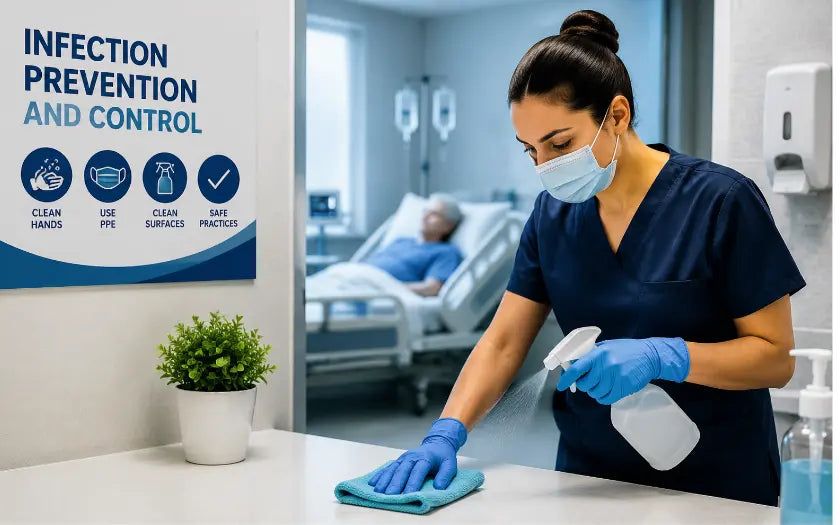
Healthcare-associated infections remain one of the most significant risks in healthcare environments. Whether in hospitals, aged care facilities, day surgeries, community health services, or disability support settings, effective Infection Prevention and Control (IPC) practices help protect patients, workers, visitors, and organisations.
In Australia, IPC is a core requirement under the National Safety and Quality Health Service (NSQHS) Standards. Understanding these requirements is essential for healthcare professionals, managers, and organisations seeking to improve patient safety, reduce infection risks, and maintain compliance.
This guide explains what the IPC Standard is, why it matters, and how organisations can implement effective infection prevention systems.
What Is Infection Prevention and Control (IPC)?
 Infection Prevention and Control refers to the policies, procedures, and practices used to prevent the spread of infectious diseases within healthcare settings.
The goal is simple:
-
Prevent infections before they occur.
-
Reduce the transmission of infectious organisms.
-
Protect patients, healthcare workers, and visitors.
-
Improve overall healthcare outcomes.
Effective IPC measures include hand hygiene, cleaning and disinfection, personal protective equipment (PPE), antimicrobial stewardship, surveillance, and outbreak management. These systems form a critical part of safe healthcare delivery. (ACSQHC)
Understanding the NSQHS Standards
The National Safety and Quality Health Service Standards were developed by the Australian Commission on Safety and Quality in Health Care to improve the quality and safety of healthcare services across Australia.
The standards provide a nationally consistent framework for healthcare organisations and help ensure patients receive safe, high-quality care. (ACSQHC)
Among the eight NSQHS Standards, the Preventing and Controlling Infections Standard is one of the most important because it directly addresses infection risks and antimicrobial resistance. (ACSQHC)
Official Reference
Healthcare professionals can review the full standard through the Australian Commission's official resource:
Preventing and Controlling Infections Standard
Why IPC Matters More Than Ever
The healthcare sector has experienced significant changes over recent years.
COVID-19 highlighted the importance of strong infection control systems, but healthcare-associated infections remain a challenge beyond pandemic situations.
Poor infection control can lead to:
-
Increased patient harm
-
Extended hospital stays
-
Higher treatment costs
-
Regulatory findings
-
Reputational damage
-
Reduced patient confidence
Strong IPC systems help organisations minimise these risks while supporting better patient outcomes. (ACSQHC)
Key Objectives of the NSQHS IPC Standard
The Preventing and Controlling Infections Standard aims to ensure health service organisations have systems in place to:
Prevent Infections
Organisations must proactively identify infection risks and implement strategies to minimise transmission.
Manage Infection Risks
Healthcare providers must monitor, assess, and respond to infection-related hazards before they impact patients or staff.
Control Antimicrobial Resistance
Antimicrobial stewardship is a major component of the standard. Healthcare services must promote the appropriate use of antibiotics and other antimicrobial medicines to reduce resistance risks. (ACSQHC)
Protect Patients and Workers
The standard recognises that infection prevention protects both consumers and the healthcare workforce. (ACSQHC)
The Core Components of Effective IPC Programs
1. Hand Hygiene
Hand hygiene remains one of the most effective methods of preventing infection transmission.
Healthcare workers should:
-
Perform hand hygiene at the correct moments.
-
Use approved hand sanitiser products.
-
Follow organisational procedures.
-
Participate in ongoing training and monitoring.
The Australian Commission provides dedicated hand hygiene education and training resources for healthcare organisations. (ACSQHC)
For additional guidance:
National Hand Hygiene Resources
2. Personal Protective Equipment (PPE)
PPE acts as a barrier between healthcare workers and infectious agents.
Examples include:
-
Gloves
-
Masks
-
Eye protection
-
Face shields
-
Gowns
Appropriate PPE selection depends on the level of infection risk and the nature of patient interactions. (ACSQHC)
3. Environmental Cleaning
Infectious organisms can survive on surfaces for extended periods.
Healthcare facilities should implement:
-
Routine cleaning schedules
-
High-touch surface disinfection
-
Equipment decontamination processes
-
Waste management systems
Environmental hygiene is a fundamental IPC requirement. (ACSQHC)
4. Surveillance and Monitoring
Effective organisations monitor infection-related data to identify emerging risks.
This may include:
-
Infection rate monitoring
-
Incident reporting
-
Compliance audits
-
Outbreak investigations
Data-driven monitoring allows healthcare organisations to continuously improve IPC performance. (ACSQHC)
5. Workforce Training and Education
Even the best policies are ineffective if workers do not understand them.
Healthcare organisations should provide ongoing education covering:
-
Standard precautions
-
Transmission-based precautions
-
Hand hygiene
-
PPE usage
-
Cleaning procedures
-
Outbreak response
Continuous learning helps build a strong safety culture across the organisation. (ACSQHC)
Standard Precautions vs Transmission-Based Precautions
 One area that often causes confusion is the difference between standard and transmission-based precautions.
Standard Precautions
These apply to all patients regardless of diagnosis.
Examples include:
-
Hand hygiene
-
Respiratory hygiene
-
Safe handling of sharps
-
Appropriate PPE use
-
Environmental cleaning
Transmission-Based Precautions
These are additional measures used when specific infectious diseases are known or suspected.
Examples include:
-
Airborne precautions
-
Droplet precautions
-
Contact precautions
Healthcare workers must understand when and how to apply each approach. (ACSQHC)
IPC and Accreditation Requirements
Compliance with the IPC Standard is a key consideration during accreditation assessments.
Assessors typically review:
-
Infection control policies
-
Staff training records
-
Hand hygiene compliance
-
Risk management systems
-
Antimicrobial stewardship programs
-
Surveillance data
Organisations that demonstrate strong infection prevention systems are generally better positioned to meet accreditation expectations. (ACSQHC)
Common IPC Challenges
Many organisations understand the importance of infection control but struggle with consistent implementation.
Common challenges include:
Limited staff training, inconsistent hand hygiene compliance, inadequate documentation, PPE misuse, and insufficient monitoring systems.
A practical IPC program requires leadership commitment, workforce engagement, and continuous improvement rather than a one-time compliance exercise.
Practical Steps to Improve IPC Compliance
 Healthcare organisations can strengthen their infection prevention programs by:
Regularly reviewing infection control policies, conducting staff refresher training, monitoring hand hygiene performance, improving incident reporting processes, and staying aligned with current Australian guidelines. (ACSQHC)
The Australian Guidelines for the Prevention and Control of Infection in Healthcare provide evidence-based recommendations that support effective IPC implementation.
External Resource
Australian Guidelines for the Prevention and Control of Infection in Healthcare
Why IPC Training Is Essential
Infection prevention is not solely the responsibility of infection control specialists.
Every healthcare worker contributes to reducing infection risks.
Training helps staff:
-
Understand current IPC requirements.
-
Improve patient safety practices.
-
Strengthen compliance knowledge.
-
Support accreditation outcomes.
-
Reduce organisational risk.
As healthcare standards continue to evolve, ongoing education remains one of the most effective investments organisations can make.
Recommended Training
For healthcare workers, managers, and organisations seeking practical infection control knowledge, consider:
Infection Prevention & Control (IPC) – NSQHS Training – Australian Compliance Training
Course Link:
Australian Compliance Training IPC Course
This course helps learners understand infection prevention principles, NSQHS compliance requirements, risk management practices, hand hygiene expectations, and practical strategies that support safer healthcare environments.
Final Thoughts
Infection Prevention and Control is far more than a compliance requirement. It is a critical component of patient safety, workforce protection, and healthcare quality.
The NSQHS Preventing and Controlling Infections Standard provides a structured framework for managing infection risks across Australian healthcare settings. By implementing strong infection control systems, investing in workforce training, and maintaining continuous improvement processes, organisations can reduce preventable harm and deliver safer care for everyone.
As healthcare environments become increasingly complex, organisations that prioritise IPC will be better positioned to meet accreditation requirements, strengthen public trust, and improve health outcomes across the communities they serve. (ACSQHC)


