
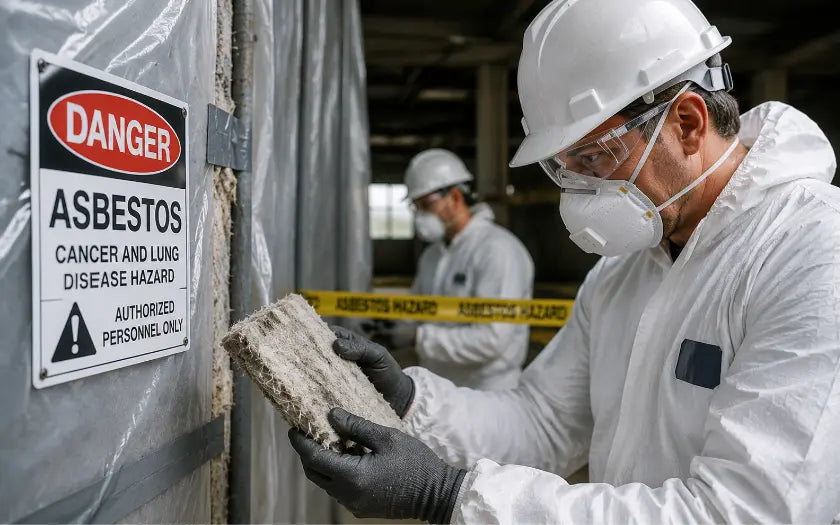
It doesn't look dangerous. It doesn't smell. You can't feel it in the air. And yet asbestos — once celebrated as a miracle building material — remains one of the most significant occupational health threats in Australia and across the world. Despite being banned in Australia in 2003, the legacy of its widespread use throughout the 20th century means that millions of homes, commercial buildings, schools, and industrial sites still contain asbestos-containing materials (ACMs) today.
For workers in construction, renovation, maintenance, and demolition — and even for office staff entering older buildings — the risk is real and ongoing. The single most effective front-line defence against that risk isn't a piece of protective equipment. It's knowledge. Specifically, it's well-designed, regularly updated asbestos awareness training delivered to the right people at the right time.
This article explores how that training works in practice, what Australian regulations require, and why investing in asbestos education is not just a legal obligation — it's a moral one.
The Ongoing Asbestos Problem in Australia
 Australia has a complicated and painful history with asbestos. For much of the 20th century, the country was one of the highest per-capita consumers of asbestos products in the world. Towns like Wittenoom in Western Australia became synonymous with the devastating consequences — entire communities affected by mesothelioma and asbestosis decades after exposure ceased.
Today, the challenge has shifted from manufacture to management. According to Safe Work Australia, asbestos-related diseases continue to claim hundreds of Australian lives every year, and industry reports suggest that the death toll from mesothelioma — the cancer most directly linked to asbestos exposure — is not expected to peak until the mid-2020s, given the long latency period of the disease, which can range from 20 to 40 years between exposure and diagnosis.
The scale of the problem is significant. A large proportion of residential homes built before 1987, and virtually all buildings constructed before 1980, are likely to contain asbestos in some form — roof sheeting, wall cladding, floor tiles, pipe lagging, or insulation. Every time a tradie drills into a wall, a homeowner renovates a bathroom, or a demolition crew tears down an old shed, the potential for fibre release is real.
Key Fact: Asbestos fibres are invisible to the naked eye. A person can be exposed without ever seeing or sensing the danger — making awareness training the critical first line of defence.
What the Law Requires: Australia's Regulatory Framework
Australia's regulatory response to asbestos is among the most comprehensive in the world, built on a combination of national and state-level legislation. Understanding the legal framework helps workers and employers appreciate why training is not optional.
Key Requirements Under WHS Legislation
The primary national framework operates under the Work Health and Safety (WHS) Act and associated regulations, administered at the state and territory level. Safe Work Australia's Code of Practice: How to Safely Remove Asbestos, alongside the Code of Practice: How to Manage and Control Asbestos in the Workplace, set out legally enforceable expectations for employers.
Core obligations include:
• All persons conducting a business or undertaking (PCBUs) must identify ACMs in their workplaces before any work begins
• Workplaces built before 31 December 2003 must maintain an asbestos register and management plan
• Removal of more than 10 square metres of non-friable asbestos requires a licensed Class B removalist
• Any removal of friable asbestos — the most dangerous, loosely bound type — requires a Class A licence
• Asbestos awareness training must be provided to all workers who are likely to disturb or encounter ACMs in the course of their work
State regulators including WorkSafe Victoria, SafeWork NSW, WorkSafe Queensland, and WorkSafe WA each enforce these requirements with inspection programs and significant penalties for non-compliance. Internationally, regulators such as the UK's Health and Safety Executive (HSE), the US Occupational Safety and Health Administration (OSHA), and the European Agency for Safety and Health at Work maintain similarly detailed frameworks — though Australia's total asbestos ban predates many comparable nations.
What Asbestos Awareness Training Actually Covers
Effective asbestos awareness training is not a box-ticking exercise. Quality training delivered by a registered training organisation (RTO) or accredited provider equips workers with practical, actionable knowledge that genuinely changes how they approach their work on-site.
Core Modules in a Quality Training Program
|
Module |
What Workers Learn |
Why It Matters |
|
Types & Properties |
Friable vs non-friable, blue/brown/white asbestos, common products |
Knowing what they're dealing with before disturbing it |
|
Health Risks & Disease |
Mesothelioma, asbestosis, lung cancer, 20–40 year latency period |
Motivates genuine, lasting caution and compliance |
|
Field Identification |
Where ACMs are commonly found, visual cues, material age indicators |
Prevents accidental disturbance in routine work |
|
Legal Obligations |
Registers, duty to report, licensing, stop-work rights |
Empowers workers to act, escalate, and speak up |
|
Safe Work Procedures |
PPE selection, decontamination, disposal, air monitoring basics |
Reduces fibre release and contamination spread |
The best training programs don't rely solely on slides and videos. They incorporate real site photographs, Australian case studies, and practical exercises — such as identifying common ACMs from images or reviewing a sample asbestos register. This is where training transitions from passive information to genuinely applied knowledge that changes on-site behaviour.
Real-World Scenarios: When Training Makes the Difference
Abstract knowledge only becomes valuable when applied at the right moment. These composite scenarios reflect patterns commonly reported to regulators and safety bodies across Australia.
Scenario 1: The Unsuspecting Renovator
 A small building contractor wins a kitchen renovation job on a 1970s Queensland home. Without asbestos awareness training, his team immediately begins removing wall sheeting and ceiling tiles. Within an hour, they've disturbed material that later tests positive for chrysotile (white) asbestos — releasing fibres throughout the home and exposing themselves, their client, and a neighbouring family.
With awareness training, the same contractor recognises the age and profile of the materials, stops work before disturbing anything, arranges sampling by an occupational hygienist, and engages a licensed removalist — protecting everyone and avoiding a costly regulatory investigation.
Scenario 2: The Maintenance Worker in a School
A maintenance officer at a Sydney school built in the 1960s is asked to drill into ceiling panels to install new light fittings. Awareness training enables him to check the building's asbestos register, identify the ceiling panels as a known ACM, consult with the facilities manager, and halt the job pending proper assessment. The alternative — drilling directly into asbestos-containing ceiling tiles — could expose dozens of students and staff without anyone realising it.
These are not hypothetical edge cases. Accidental disturbances during routine maintenance and renovation are among the most common causes of uncontrolled asbestos exposure in Australia and globally.
The Global Perspective: Australia Leads, Others Follow
Australia's approach to asbestos management is widely referenced internationally as a model of best practice. The Asbestos Safety and Eradication Agency (ASEA), established under federal legislation in 2013, coordinates Australia's national strategic plan for managing asbestos in the built environment — a structure that many countries are only beginning to develop.
Globally, the picture remains concerning. According to the World Health Organization (WHO), asbestos continues to be used in a number of countries across Asia, Eastern Europe, and parts of Africa and South America. The global burden of asbestos-related disease is expected to grow for decades as a result. Countries including Russia, China, India, and Brazil continue to mine or use chrysotile asbestos despite overwhelming scientific consensus on its dangers.
This has a direct implication for Australian workplaces: imported building materials, equipment, and products from countries without asbestos bans can and occasionally do enter the local supply chain. Awareness training that includes this dimension — teaching workers to consider the provenance of materials, not just the age of local buildings — is becoming increasingly important.
Who Needs Training and How Often?
Roles That Require Asbestos Awareness Training
• Tradies and construction workers operating in pre-2003 buildings of any type
• Demolition crews, plumbers, electricians, and HVAC technicians working in older structures
• School maintenance staff and facilities managers in older public buildings
• Property managers and real estate professionals advising on older residential and commercial stock
• First responders, including firefighters, who may encounter damaged ACMs at emergency scenes
• Supervisors and site managers responsible for safe work method statements and site inductions
Safe Work Australia recommends that asbestos awareness training be refreshed regularly — generally every one to two years — since legislation is updated, new guidance materials emerge, and workers encounter different site conditions over time. Some states also require training records to be kept as part of a site's formal compliance documentation.
In Australia, asbestos awareness training is commonly delivered through registered training organisations (RTOs) using nationally recognised units of competency. Online delivery has become increasingly accessible, though it works best when combined with practical, scenario-based components that anchor the knowledge in real work contexts.
The Business Case: Why Training Is a Smart Investment
Some employers still view asbestos awareness training as a cost — an inconvenience that takes workers off-site for a day. This perspective doesn't hold up to scrutiny.
 The financial, legal, and human costs of an uncontrolled asbestos exposure incident are severe. Regulatory investigations, site shutdowns, remediation costs, potential civil litigation, reputational damage, and long-term health liability to affected workers all create a business risk that significantly outweighs the cost of a training program.
Industry Insight: Proactive asbestos training not only reduces the likelihood of incidents — it can also improve insurance premiums, strengthen eligibility for government contracts, and build a safety culture that attracts and retains skilled workers.
Beyond the financial case, there is an ethical dimension that responsible employers don't ignore. Workers have a right to go home safe. Families shouldn't spend decades waiting for a diagnosis that confirms their loved one was exposed to a preventable hazard. Training is how employers honour that duty of care in the most practical and tangible way.
Practical Tips: Getting Asbestos Training Right in Your Workplace
If you're an employer, WHS officer, or business owner looking to implement or improve asbestos awareness training, here is what separates genuinely effective programs from mediocre ones:
• Choose an RTO or accredited provider with demonstrated experience in construction and hazardous materials — not just general WHS providers
• Ensure training references Australian legislation and Safe Work Australia codes of practice, with relevant state-level requirements included
• Include practical identification exercises using local examples of ACMs — not generic international content that workers won't recognise on-site
• Combine online modules with on-site walkthroughs wherever possible, especially for workers who regularly enter older buildings
• Keep training records in a centralised, accessible system and set calendar reminders for refresher cycles
• Follow up training with a review of the site asbestos register and clear stop-work procedures communicated to every worker
Where to Access Reputable Training in Australia
Several nationally recognised pathways exist for asbestos awareness training. Safe Work Australia (safeworkaustralia.gov.au) publishes free codes of practice, guidance materials, and links to training resources that define the national standard. The Asbestos Safety and Eradication Agency (asbestossafety.gov.au) maintains a comprehensive hub that includes the National Strategic Plan and asbestos register guidance.
State-based regulators — SafeWork NSW, WorkSafe Victoria, WorkSafe Queensland, and WorkSafe WA — each provide jurisdiction-specific guidance, inspection schedules, and approved training pathways. For formal qualifications, the training.gov.au website lists all RTOs registered to deliver asbestos-related units of competency across Australia.
Conclusion: Knowledge Is the First Layer of Protection
Asbestos is not going away any time soon. The buildings are still standing, the materials are still embedded, and the fibres remain dangerous for as long as they're disturbed without proper care. No amount of regulation on its own changes what happens at the moment a drill meets an unmarked wall.
What changes that moment is a trained worker who pauses, who recognises the risk, and who knows exactly what to do. That worker is the product of well-delivered, properly refreshed, site-relevant asbestos awareness training.
In Australia, we have the regulatory framework, the institutional expertise, and the hard-won lessons of our own history to build on. The question for every employer and worker in the construction and maintenance sector is simple: does your team have the knowledge they need to make the right call when it matters? If the answer is uncertain, that's where the investment should go next.
Take Action: Visit safeworkaustralia.gov.au or asbestossafety.gov.au to access free codes of practice, resources, and links to accredited training providers in your state or territory.


