
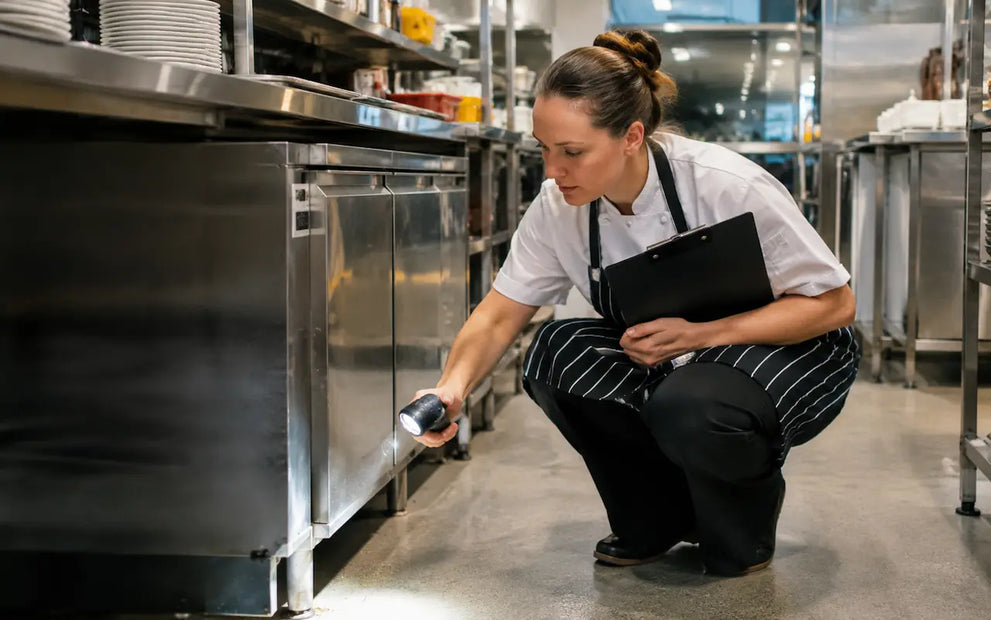
A pest sighting in a commercial kitchen is more than an unpleasant discovery. Rodents, insects and birds can contaminate ingredients, packaging, equipment and food-contact surfaces. An isolated sighting may also indicate a problem in storage, waste management or building maintenance.
For Australian operators, food business pest control requirements are about prevention and prompt action, not simply arranging periodic spraying. The food safety rules require businesses to take practicable measures to keep pests out, remove pests that enter and prevent conditions that allow them to live on site.
This guide explains the relevant standards, practical controls, treatment decisions, record-keeping and the steps managers should take when pests are found. It also includes a workplace example and an inspection-readiness checklist.
What Are the Pest Control Requirements for Australian Food Businesses?
Pest control obligations under Food Standards Code Standard 3.2.2
Clause 24 of Standard 3.2.2 requires food businesses to take all practicable measures to prevent pests entering food premises, eradicate pests and prevent their harbourage. The requirement also extends to food transport vehicles where applicable. The FSANZ Standard 3.2.2 guide explains the provision and the risk-based approach behind it.
“All practicable measures” does not mean a business can promise that a pest will never enter. It means management must take realistic, effective steps appropriate to the premises and the likelihood of pest activity. A kitchen with exposed external doors, frequent deliveries and a nearby waste area may need different controls from a sealed production facility.
What does Standard 3.2.3 require for food premises?
Standard 3.2.3 addresses food premises and equipment, including design and construction that help exclude pests and support effective cleaning. Smooth, accessible surfaces, well-maintained fixtures and sealed service penetrations can reduce the places pests enter or hide. These design considerations support, rather than replace, the duties under Standard 3.2.2.
Who is responsible for pest prevention and control?
The food business is responsible for meeting its legal obligations. Owners and managers should arrange inspections, maintenance, suitable treatment and follow-up. Supervisors can check monitoring results and confirm that affected food is managed safely. Food handlers should report droppings, insects, damaged packaging and other signs promptly instead of attempting unauthorised pesticide treatment.
Is professional pest control mandatory for restaurants?
Standard 3.2.2 does not impose a universal requirement for every restaurant to maintain a professional pest control contract. However, professional assistance may be necessary where a business cannot control the problem effectively or safely. The FSANZ pest guidance recommends professional help when internal measures are inadequate. Local approval conditions, sector-specific rules or a business food safety program may create additional requirements.
Legal requirements versus recommended pest management practices
| Requirement or practice | Legal obligation | Practical application |
|---|---|---|
| Prevent entry, eradicate pests and prevent harbourage | Required under Standard 3.2.2, clause 24 | Seal gaps, inspect activity, remove pests and address nesting conditions |
| Maintain suitable premises and equipment | Applicable requirements under Standard 3.2.3 | Maintain doors, screens, drains and accessible cleaning areas |
| Use a written pest management plan | Recommended generally; may be required by other applicable arrangements | Document monitoring, responsibilities, controls and corrective actions |
| Engage a pest control contractor | Not universally mandatory under clause 24 | Seek specialist assistance when risks or infestations exceed in-house capability |
| Keep pest inspection and treatment reports | Recommended generally; additional requirements may apply | Record sightings, treatments, repairs and verification |
Source: FSANZ pest guidance and FSANZ Standard 3.2.2 guide. Requirements may vary with applicable state or territory conditions and sector-specific arrangements.
How Can Food Businesses Prevent and Control Pests?
Common pests found in Australian food businesses
Different pests leave different evidence. Rodents can damage packaging and contaminate stock with droppings or urine. Cockroaches favour sheltered, warm and damp areas. Flies may enter through open doors and reach uncovered food. Ants and stored-product insects can affect dry goods, while birds may contaminate loading docks, outdoor dining areas and uncovered stock.
| Pest type | Common warning signs | High-risk locations | Recommended preventive actions |
|---|---|---|---|
| Rodents | Droppings, gnaw marks, damaged bags | Dry stores, service penetrations, bins | Seal entry points; protect stock; monitor activity |
| Cockroaches | Live insects, egg cases, droppings | Behind equipment, drains, cupboards | Clean hidden spaces; manage moisture; inspect |
| Flies | Repeated sightings near food or waste | Doors, windows, bins, servery | Fit screens; cover food; manage rubbish |
| Ants | Trails and insects near ingredients | Shelves, wall gaps, preparation areas | Seal access; clean spills; store food securely |
| Stored-product insects | Insects or webbing in dry goods | Flour, grains, pantry shelving | Inspect deliveries; rotate stock; isolate affected goods |
| Birds | Droppings, nesting, damaged stock | Loading docks, outdoor waste areas | Restrict access; protect food and storage |
Practical control examples are consistent with NSW Food Authority pest control guidance and Queensland Government pest control guidance. This table is operational guidance, not a separate statutory checklist.
Signs of pest activity in commercial kitchens
Look beyond visible insects. Inspect for gnaw marks, droppings, nesting material, torn bags, unexplained odours and activity around drains or wall penetrations. Check under benches, behind refrigerators, inside dry stores and near waste containers. A pest may be active outside operating hours, so absence of a daytime sighting does not prove that a site is pest-free.

Preventing pest entry through building maintenance
A practical inspection begins at the building perimeter. Examine door sweeps, flyscreens, self-closing doors, damaged wall finishes, roof openings, drainage connections and gaps around pipes. Repair defects promptly and confirm that loading doors are closed when not in use. External storage, clutter and vegetation near entrances should not create convenient harbourage.
Food storage, cleaning and waste management
Store ingredients in sound, closed containers and keep stock off surfaces where inspection and cleaning would be difficult. Check deliveries for torn cartons or pest evidence before accepting them into storage. Clean spills promptly, remove food debris from beneath equipment and use lidded waste bins emptied at appropriate intervals.
Pest control is one part of cross-contamination in food businesses. Staff should also protect utensils, work surfaces and ready-to-eat food from contaminated hands, equipment and packaging. A pest treatment cannot make food safe again if that food has already been contaminated.
Safe pest control treatments around food
Select controls that do not introduce chemical, physical or biological hazards. Pest devices should not be positioned where bait, pesticide, insects or dead pests can fall onto food or food-contact surfaces. Follow product labels, safety directions and applicable chemical controls. Food businesses should use only products suitable for their intended food-premises application and obtain qualified advice when needed.
How often should a food business have pest control?
There is no single nationwide spraying interval prescribed for every food business. Frequency should reflect pest activity, the premises, local climate, food operations, treatment type and the results of monitoring. The Queensland Government pest control guidance explicitly notes that treatment frequency varies. A business should reassess its schedule after repeated sightings, building works, seasonal changes or an infestation.
How Do You Create a Food Business Pest Management Plan?
Assessing pest risks across food premises
Begin with a walk-through of receiving, preparation, storage, service, waste and food transport areas. Identify likely pest species, entry routes, attractants and places where pests could hide. Rate areas by the likelihood of pest activity and the consequences of contamination. Prioritise ready-to-eat food areas, open ingredients and high-traffic delivery points.
Establishing inspection and monitoring procedures
Assign responsibility for routine checks and decide what employees must report immediately. A monitoring procedure should identify inspection points, suitable devices, inspection intervals, escalation thresholds and who signs off corrective action. Do not use a fixed schedule as a substitute for responding to new evidence.
Creating a pest control site map
A simple site map can show external entrances, drains, waste storage, high-risk stock rooms and the position of approved monitoring devices. Keep it current when equipment is moved or renovations change access points. FSANZ recommends mapping devices and pesticides so they can be managed without exposing food or food-contact surfaces.
Choosing appropriate treatment and contractor arrangements
Choose preventive measures first: remove food sources, close gaps and eliminate harbourage. Where treatment is necessary, ensure it suits the species, location and contamination risk. A professional contractor should communicate the product used, placement, access restrictions, follow-up requirements and any cleaning or food protection measures. Management remains responsible for addressing underlying defects.
What pest control records should food businesses keep?
A useful pest management file may include sighting reports, site maps, inspection findings, treatment details, chemical information, maintenance work orders and evidence that actions were effective. FSANZ recommends recording dates, pest activity, controls used and recommended actions. Some businesses may also have record duties under an applicable food safety program or other regulatory arrangements; do not assume that every business has an identical statutory pest log requirement.
| Date | Location | Pest activity | Food risk | Corrective action | Owner | Verification |
|---|---|---|---|---|---|---|
| Example: 12 Nov | Dry store | Rodent droppings | Open flour bag nearby | Isolate stock; clean; investigate entry | Duty manager | Follow-up inspection recorded |
Illustrative log only. For recommended record elements, see FSANZ pest guidance.
Six steps to follow when pests are discovered
- Report the evidence immediately to the supervisor and record where it was found.
- Isolate affected food, packaging and work areas to prevent further contamination.
- Assess whether food is unsafe or unsuitable; dispose of affected stock where necessary.
- Clean and sanitise relevant equipment and food-contact surfaces after removing contamination.
- Arrange suitable treatment and repair entry points or conditions that support pests.
- Verify that corrective measures worked before restarting affected operations, and document the outcome.

Practical example: Rodent activity in a restaurant storeroom
During opening checks, a café supervisor finds rodent droppings beside a damaged flour bag in dry storage. The supervisor prevents staff from using the affected stock, inspects nearby packages and records the location. Unsafe or contaminated food is discarded. Staff clean and sanitise affected areas, while management investigates a gap around a service pipe and arranges suitable pest treatment.
The manager records the incident, disposal decision, repair and follow-up inspection. Food handling resumes in affected areas only when the contamination risk has been controlled. Temperature controls remain a separate responsibility: the 2-hour/4-hour food safety rule addresses time and temperature exposure, not pest contamination.
Pest Control Checklist, Compliance Risks and FAQs
Food business pest control readiness checklist
- Inspect preparation, storage, delivery and waste areas regularly.
- Check doors, windows, drains and service penetrations for gaps.
- Keep ingredients covered and remove food waste promptly.
- Train staff to report droppings, insects and damaged packaging.
- Record significant sightings, treatments, repairs and corrective action.
- Review monitoring frequency and contractor arrangements against current risk.
- Verify that controls work after an infestation or building repair.
- Refresh food safety training and allocate clear responsibilities.

Common pest management mistakes to avoid
Common failures include treating only the visible insects, leaving waste exposed overnight, overlooking damaged door seals, storing stock against inaccessible walls and placing pesticides where they could contaminate food. Another mistake is assuming a contractor visit automatically resolves the problem. Without maintenance, cleaning and monitoring, the conditions attracting pests may remain.
What happens if food businesses fail to control pests?
Uncontrolled pests can contaminate food and surfaces, damage stock and create a risk of foodborne illness. They may also lead to adverse inspection findings, corrective action requirements or enforcement under applicable food law. Consequences depend on the circumstances and jurisdiction; there is no single penalty that applies to every pest sighting. The NSW Food Authority pest control guidance explains why pest prevention is a core food business responsibility.
Supporting pest prevention through food safety training
Staff need to recognise warning signs, protect food during treatment and know when to escalate a concern. Managers should reinforce these practices during induction and refresher training. ACT’s Food Safety Supervisor Training Australia course is a relevant option for developing knowledge of food hygiene, cleaning, pest prevention and operational food safety responsibilities. Training supports compliance but does not replace effective site controls.
Food Safety Supervisor Training Australia
Understand food hygiene, pest prevention and safe food handling responsibilities. Strengthen workplace practices through practical food safety knowledge.
Conclusion
Effective pest control in food businesses depends on prevention, early reporting, risk-based treatment and verified corrective action. Review premises regularly, document meaningful findings and ensure employees know how to protect food when pests are discovered. A practical plan is more useful than relying on spraying alone.


