
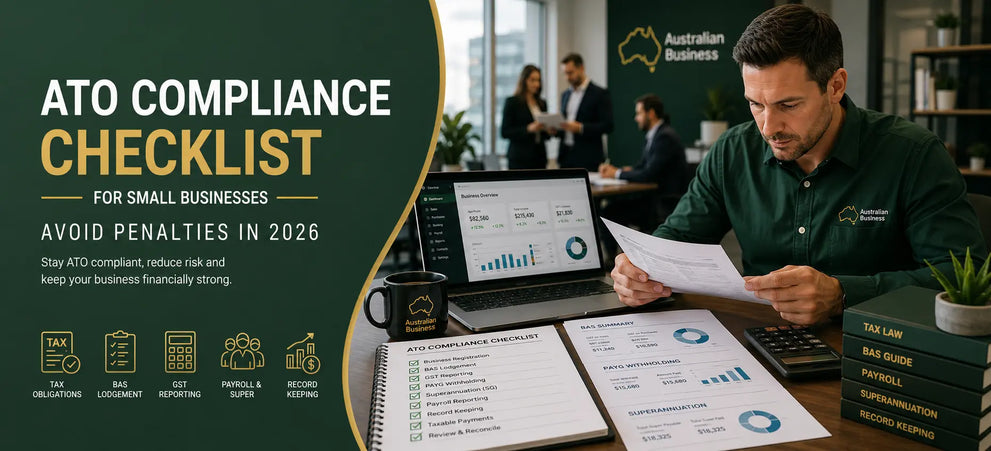
Running a small business in Australia has never been more digital — or more closely monitored. In 2026, the Australian Taxation Office (ATO) is increasing its focus on small business compliance, especially around GST reporting, PAYG withholding, superannuation, and record-keeping. Businesses that ignore their obligations may face penalties, interest charges, audits, or cash flow disruptions. (DLK Advisory)
The good news? Most compliance problems are preventable.
By following a structured compliance process and staying organised throughout the year, small businesses can reduce risk, avoid unnecessary stress, and focus on growth instead of dealing with ATO issues.
This practical checklist explains the key ATO compliance areas Australian small businesses should focus on in 2026.
Why ATO Compliance Matters in 2026
The ATO is using stronger data-matching technology, digital reporting systems, and real-time payroll monitoring to identify non-compliance faster than ever before. Areas receiving increased attention include:
-
Late BAS lodgements
-
Unpaid PAYG withholding
-
Incorrect GST claims
-
Missing or late super payments
-
Poor record-keeping
-
Undeclared cash income
The ATO has publicly urged small businesses to “start 2026 strong” and take simple steps early to avoid compliance action later. (Australian Taxation Office)
For small businesses, compliance is no longer something to handle only at tax time. It needs to become part of everyday operations.
2026 ATO Compliance Checklist for Small Businesses
1. Confirm Your Business Registrations
Start by checking whether your business registrations are current and accurate.
Your business may need:
-
Australian Business Number (ABN)
-
Tax File Number (TFN)
-
GST registration
-
PAYG withholding registration
-
Single Touch Payroll (STP) setup
Businesses must register for GST once annual turnover reaches $75,000 ($150,000 for non-profits). (Blackwattle Tax)
If you employ staff, you must also register for PAYG withholding before your first pay run and use STP-enabled payroll software. (Nanak Accountant)
Quick Tip
Review your ATO Online Services account regularly to ensure all business details remain up to date.
2. Keep Accurate Financial Records
Poor record-keeping remains one of the biggest compliance issues for Australian small businesses. The ATO requires businesses to keep records for at least five years. (International Commercial Service)
You should maintain records for:
-
Income and sales
-
Business expenses
-
GST invoices
-
Payroll and super payments
-
Bank statements
-
Asset purchases
-
Contractor payments
Digital bookkeeping software such as Xero, MYOB, or QuickBooks can help automate record management and reduce manual errors.
Common Mistake to Avoid
Mixing personal and business transactions in the same bank account creates major compliance risks and bookkeeping confusion.
3. Lodge BAS on Time
Business Activity Statements (BAS) are one of the most important compliance obligations for Australian businesses.
Your BAS may include:
-
GST reporting
-
PAYG withholding
-
PAYG instalments
-
Fuel tax credits (if applicable)
Most small businesses lodge BAS quarterly, although some lodge monthly depending on turnover and reporting requirements. (Daintree Consulting)
Typical quarterly BAS due dates include:
-
28 October
-
28 February
-
28 April
-
28 July
Late lodgement can result in Failure to Lodge (FTL) penalties and interest charges.
Best Practice
Do not wait until the deadline week. Reconcile accounts and prepare BAS reports throughout the quarter.
4. Manage GST Correctly
Incorrect GST reporting is one of the most common triggers for ATO reviews.
Once GST-registered, businesses must:
-
Charge 10% GST on taxable sales
-
Provide valid tax invoices
-
Report GST collected and paid correctly
-
Claim only legitimate GST credits
The ATO increasingly compares BAS data with banking records, payroll systems, and supplier information to detect inconsistencies. (Daintree Consulting)
Important Reminder
Do not claim GST credits without proper supplier tax invoices.
5. Stay On Top of PAYG Withholding
If your business has employees, PAYG withholding obligations are critical.
You must:
-
Withhold tax from employee wages
-
Report payroll information through STP
-
Pay withheld amounts to the ATO
-
Keep payroll records accurate
Underpaying PAYG withholding or reporting incorrect payroll figures can quickly trigger compliance action.
The ATO now relies heavily on STP data to monitor payroll compliance in real time. (Daintree Consulting)
Best Practice
Run regular payroll audits to ensure wages, tax, leave balances, and super calculations are accurate.
6. Prepare for Payday Super Changes
One of the biggest compliance changes approaching Australian businesses is Payday Super.
From 1 July 2026, employers will generally be required to pay superannuation at the same time employees are paid, rather than quarterly. (Facebook)
Businesses should begin preparing now by:
-
Reviewing payroll systems
-
Checking cash flow processes
-
Automating super payments
-
Ensuring payroll software is compliant
Late super payments can already result in Super Guarantee Charges (SGC), which are significantly more expensive than standard super obligations.
Why It Matters
The shift to Payday Super will increase reporting visibility and reduce opportunities for delayed payments.
7. Separate Tax Money From Operating Funds
Many small businesses experience tax problems because GST and PAYG amounts are accidentally spent during slow cash flow periods.
A simple solution is to create separate accounts for:
-
GST collections
-
PAYG withholding
-
Superannuation obligations
Several accounting advisors now recommend automatically transferring tax amounts into separate savings accounts after each payment received. (DLK Advisory)
This creates better cash flow discipline and reduces end-of-quarter stress.
8. Monitor Cash Flow Carefully
ATO compliance problems often begin with poor cash flow management.
If your business struggles with overdue tax debts:
-
Contact the ATO early
-
Discuss payment plans
-
Avoid ignoring notices
-
Seek professional advice immediately
The ATO generally responds more positively to businesses that engage early rather than businesses that avoid communication. (DLK Advisory)
Important
Lodging on time is usually better than not lodging at all — even if payment cannot be made immediately.
9. Review Employee and Contractor Classifications
Incorrectly classifying workers can create serious compliance issues involving:
-
PAYG withholding
-
Super obligations
-
Payroll tax
-
Fair Work liabilities
Review whether your workers are genuinely independent contractors or legally employees under Australian law.
Best Practice
Keep written agreements and regularly review contractor arrangements with professional advisors.
10. Work With a Registered Tax Professional
Tax rules continue to evolve rapidly across Australia.
Working with a registered tax agent or BAS agent can help businesses:
-
Reduce compliance risk
-
Improve record accuracy
-
Meet lodgement deadlines
-
Manage ATO correspondence
-
Identify legitimate deductions
-
Prepare for audits
The ATO itself encourages businesses to seek professional support rather than relying on informal online advice. (DLK Advisory)
Final Thoughts
ATO compliance in 2026 is about being proactive, organised, and digitally prepared.
For Australian small businesses, the most effective strategy is not waiting until problems appear — it is building simple compliance habits into daily operations. Accurate records, timely BAS lodgements, compliant payroll systems, and proper cash flow management can significantly reduce the risk of penalties and audits.
As ATO monitoring becomes more advanced, businesses that stay prepared will not only avoid penalties but also create stronger financial foundations for long-term growth.
Small steps today can prevent expensive compliance problems tomorrow.
Conclusion
ATO compliance does not need to feel overwhelming. With the right systems, regular bookkeeping, and a structured checklist, Australian small businesses can confidently manage GST, PAYG, BAS, payroll, and super obligations throughout 2026.
The businesses that succeed are usually not the ones doing complicated things — they are the ones consistently doing the basics correctly.


