
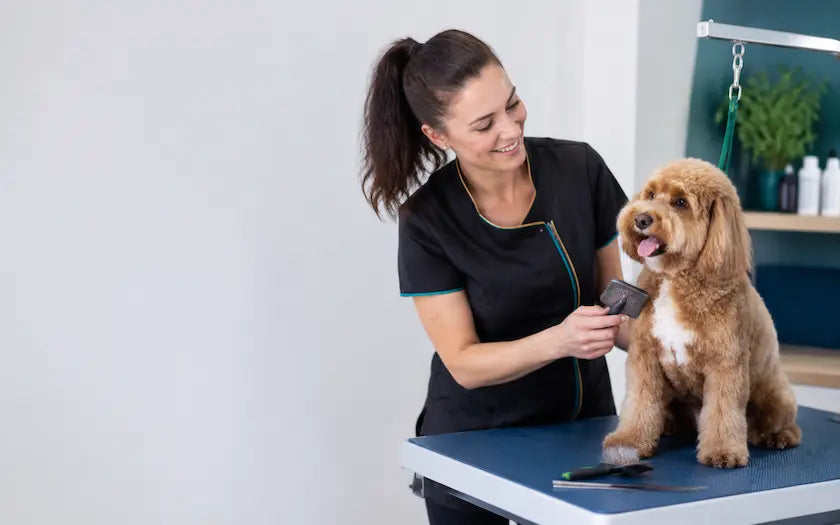
Walk into any suburban grooming salon on a Saturday morning and you'll see it straight away — a queue of anxious cavoodles, a groomer covered in fur, and an owner hovering by the door asking "will it hurt her?" It's part therapy session, part hairdressing, part animal handling. And it's one of the few trades in Australia where you can start with almost nothing and, within a few years, be running your own small business out of a converted van or a shopfront on the high street.
Dog grooming has quietly become one of the more stable trade careers in the country. Pet ownership across Australia remains high, and owners are spending more on grooming, wellness, and coat care than they did a decade ago. That shift has created steady demand for groomers who actually know what they're doing — not just people who can hold a pair of clippers.
This guide walks through what the job really involves, the training pathways available, what it costs to get started, and what you can realistically expect to earn.
What Does a Dog Groomer Actually Do?
The job is more technical than most people assume. A professional groomer isn't just bathing dogs — they're assessing coat condition, identifying skin issues, managing anxious or reactive animals safely, and shaping a cut that suits both the breed and the owner's request.
A typical day might include:
-
Bathing and de-shedding a double-coated breed like a Labrador or Husky
-
Hand-stripping a terrier's wiry coat (a skill that takes real practice to master)
-
Scissor-finishing a poodle or cavoodle into a specific style
-
Trimming nails, cleaning ears, and checking for parasites or lumps
-
Talking a nervous rescue dog through its first ever grooming session
That last point matters more than most people expect going in. A groomer who can read canine body language and stay calm under a wriggling, anxious animal will always outlast one who only has technical scissor skills. Experienced groomers often say the handling side of the job takes longer to master than the cutting side.
Do You Need a Formal Qualification to Groom Dogs in Australia?
Here's the honest answer: no, not legally. There's no single national licence required to call yourself a dog groomer in Australia, and some salons will hire junior bathers or assistants with zero formal training, expecting to train them on the job.
But "not required" and "not worth doing" are two very different things.
Employers overwhelmingly prefer applicants with some form of recognised training, because it signals you already understand animal handling, hygiene standards, and grooming technique before you ever touch a client's dog. If you want to work independently, run a mobile grooming van, or eventually open your own salon, a certificate also builds trust with clients who are, understandably, protective of their pets.
Insurance is the other piece people forget. Most public liability insurers ask about relevant training when you apply for business cover, and having a completed course on file makes that conversation considerably easier.
Training Pathways: From Short Courses to Nationally Recognised Certificates

There are essentially three tiers of training available in Australia, and which one suits you depends on your goals, budget, and timeline.
1. Short Introductory Courses
These are entry-level, practical courses designed to get you comfortable with basic bathing, brushing, and clipping techniques. TAFE campuses in several states, such as GOTAFE's introduction to dog grooming and TAFE Queensland's pet grooming short course, run short "introduction to dog grooming" style courses, often over a few weeks, aimed at people testing the waters before committing to something longer.
They won't make you job-ready as a stylist, but they're a sensible first step if you've never handled grooming tools professionally and want to confirm you actually enjoy the work before investing more time and money.
2. Private and Online Industry Courses
This is where most working groomers actually start. Private training providers and Registered Training Organisations run structured grooming courses that combine video instruction, theory modules, and practical skill-building around coat types, breed standards, tool use, and handling techniques. Many are designed for people who want to move quickly from "interested" to "employable" without committing to a multi-year TAFE diploma.
If you're weighing up your options, the Professional Dog Grooming Training course is a good example of this middle pathway — it's built specifically around practical, job-focused grooming skills rather than years of general animal care theory, which suits people who already know they want to groom dogs specifically and want to get there efficiently.
3. Nationally Recognised Qualifications (TAFE / RTO Certificates)
For those who want a formal, government-recognised credential, the Certificate III in Animal Care Services (Pet Grooming) is the benchmark qualification offered through TAFE campuses and other RTOs around the country, including providers like South Metropolitan TAFE and Bendigo TAFE. It's a comprehensive program covering hygiene grooming, coat and breed-specific techniques, product selection, and client communication, and it typically includes mandatory work placement in a real grooming environment.
This qualification is worth considering if you want the broadest possible skill set, plan to work across different animal care settings (not just grooming), or want a credential that's instantly recognisable to larger employers and veterinary-linked businesses.
Choosing the Right Course for You
None of these pathways is objectively "the best" — it depends on what you're trying to achieve.
If you want to test your interest cheaply, a short course makes sense. If you're serious about becoming a working groomer as fast as possible and want practical, grooming-specific training, a focused private program is usually the quicker route. If you want the fullest possible qualification and don't mind a longer commitment, the TAFE Certificate III pathway is the more traditional choice.
A quick way to decide: ask yourself whether you want to specialise narrowly in grooming, or whether you'd also value broader animal care knowledge that could open doors into vet nursing, kennel management, or shelter work later on.
What Does Dog Grooming Training Cost and How Long Does It Take?
Costs vary considerably depending on the pathway.
Short introductory TAFE courses tend to be the cheapest, often running for a few weeks part-time. Private online and blended courses generally sit in a mid-range price bracket and can often be completed in a matter of weeks to a few months, depending on how quickly you move through the material. Full Certificate III qualifications through TAFE are the largest investment of time — often a year or more when studied part-time — but include structured work placement, which some employers value highly.
One practical tip from groomers already in the industry: budget separately for your own tool kit. Quality clippers, blades, and shears aren't included in most course fees, and professional-grade equipment is a real cost — often several hundred dollars — that catches new groomers off guard.
Skills You'll Need Beyond the Certificate
Formal training gives you the technical foundation, but the groomers who last in this industry tend to share a handful of traits that no course can fully teach:
-
Physical stamina. You're on your feet most of the day, often bent over a table, and larger or wriggly dogs can be physically demanding.
-
Patience under pressure. Anxious dogs, tight appointment schedules, and demanding owners all test your patience in the same afternoon.
-
Attention to detail. A slightly uneven scissor line is obvious to a client the moment they get home.
-
Comfort with minor risk. Bites, scratches, and nicks happen occasionally, even to experienced groomers. Knowing how to read warning signs in a dog's body language reduces this significantly.
None of this is meant to discourage you — it's meant to set realistic expectations. Most groomers describe the first six months on the job as the steepest learning curve, and things get noticeably easier once you've handled a wide range of breeds and temperaments.
Career Pathways and Earning Potential

Australia's dog grooming industry offers a fairly clear progression once you're qualified.
Entry-level / junior groomer or bather: Most people start here, often washing, drying, and brushing dogs while a senior groomer handles the actual cut. According to industry salary reporting sites like SEEK and PayScale, entry-level pay in this space generally sits toward the lower end of the grooming pay scale, with hourly rates commonly in the low-to-mid $20s.
Experienced groomer: Once you can independently style a range of breeds, pay typically increases. Reported averages across various Australian salary tracking platforms, including Indeed and ERI SalaryExpert, place experienced groomers somewhere in the mid-$20s to low-$30s per hour, though this varies significantly by state, city versus regional location, and whether tips are included.
Salon owner or mobile groomer: This is where the ceiling really lifts. Groomers who build their own client base — particularly through mobile grooming vans, which have grown in popularity across Australian suburbs — can charge per appointment rather than earning a wage, and busy operators in metro areas often report significantly higher take-home income than salaried staff. According to industry reports, well-established groomers in capital cities such as Sydney, Melbourne, and Brisbane can charge upward of $100–$200 per session for larger or more complex breeds, though exact figures vary by region and demand.
Regional areas shouldn't be dismissed either. In smaller towns with fewer grooming providers, a single well-trained groomer can become the only local option, which brings its own pricing power even without big-city foot traffic.
A Quick Snapshot of the Career Ladder
|
Stage |
Typical Focus |
General Pay Signal |
|
Junior / Bather |
Washing, drying, brushing, assisting |
Entry-level hourly rate |
|
Qualified Groomer |
Full grooms, breed-specific styling |
Mid-range hourly rate |
|
Senior / Specialist |
Show grooming, hand-stripping, complex breeds |
Above-average hourly rate |
|
Salon Owner / Mobile Groomer |
Running the business, own client base |
Income tied to bookings, not a wage |
(Figures vary by state, employer, and experience — treat this as a general guide, not a guarantee.)
Finding Work Once You're Qualified
Most new groomers land their first role in one of a few places: a commercial grooming salon, a pet retail chain with an in-store grooming service, a veterinary clinic that offers grooming alongside medical care, or a boarding kennel. Work placement completed during your course is often the easiest way in — plenty of groomers get offered a junior position at the very salon where they did their placement, simply because the employer already knows how they work.
From there, many groomers eventually move toward mobile grooming or opening their own small salon once they've built confidence, a client base, and enough savings to cover equipment and a van or shopfront.
Is Dog Grooming a Good Career Choice in Australia?
It suits a particular kind of person — someone who genuinely likes animals more than they mind hard physical work, who doesn't need a desk job to feel fulfilled, and who's comfortable with the idea that a good chunk of their income depends on skill and reputation rather than a fixed salary.
For the right person, it offers something a lot of trades don't: a relatively fast path from training to paid work, genuine flexibility once you're established, and a tangible sense of satisfaction handing a scruffy, matted dog back to its owner looking (and clearly feeling) like a new animal.
If that sounds like you, the practical next step is choosing a training pathway that matches your timeline and budget. For most people wanting a fast, focused, and genuinely practical route into the industry, the Professional Dog Grooming Training course is worth a close look — it's built around the real, hands-on skills employers actually ask for, without dragging the process out longer than it needs to be.


