
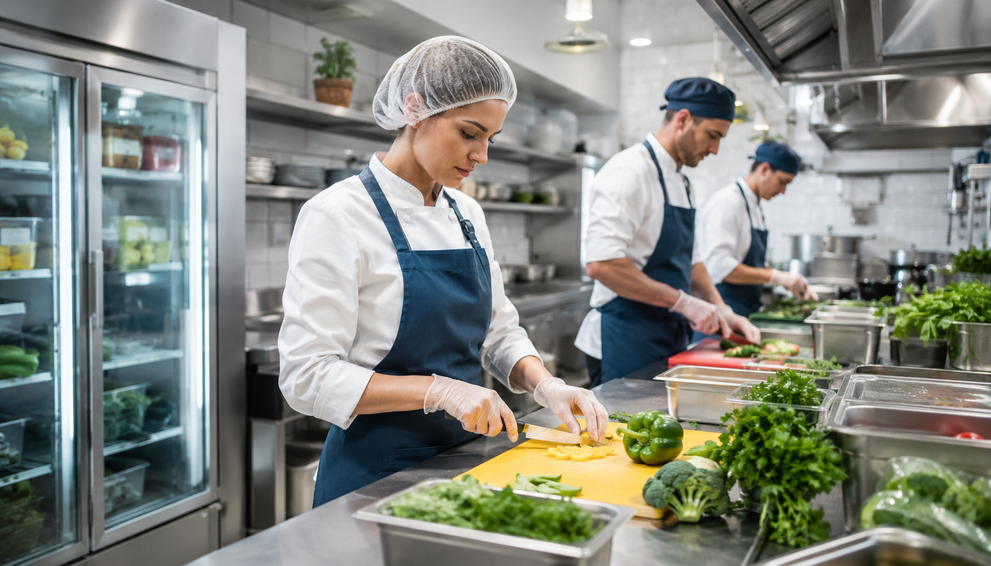
Food safety is one of those things most people don't think about until something goes wrong. A birthday celebration at a local café, a school canteen lunch, a hospital meal — behind each of these moments is a chain of people responsible for keeping food safe. In Australia, that chain is governed by some of the most structured food safety legislation in the world.
But what does it actually mean to be a "food handler" under Australian law? And what are you legally required to know, do, and prove?
This article breaks it all down — clearly, practically, and without the legal jargon.
What Is a Food Handler Under Australian Law?
Under the Australia New Zealand Food Standards Code — specifically Standard 3.2.2 — a food handler is defined as any person who directly engages in the handling of food as part of a food business. That includes preparing, storing, packaging, serving, or transporting food.
It's a broad definition. It covers the chef plating a meal, the warehouse worker stacking frozen goods, the café volunteer at a community event, and the delivery driver transporting chilled products. If your work touches food in any meaningful way, you're a food handler in the eyes of the law.
This matters because Standard 3.2.2 places specific legal obligations on both food handlers and their employers (food businesses). Ignorance of the standard isn't a defence — for either party.
The Core Legal Obligations Every Food Handler Must Meet
Personal Health and Hygiene
The standard is direct: food handlers must not handle food if they know, or reasonably suspect, they are ill with a condition that could cause contamination. This includes gastrointestinal illnesses like nausea, vomiting, and diarrhoea, as well as hepatitis A and typhoid.
If a food handler has been diagnosed with one of these conditions, they are legally required to report it to their supervisor. This isn't a matter of workplace policy — it's a statutory requirement.
Beyond illness, food handlers must maintain high standards of personal cleanliness. This includes washing hands thoroughly at the right times — before handling food, after handling raw meat, after using the toilet, after touching hair or face, and after handling waste. The Food Standards Australia New Zealand (FSANZ) guidelines specify not just that hands must be washed, but how they must be washed: using soap and warm running water, for at least 20 seconds, followed by thorough drying with a single-use towel.
Preventing Contamination
Food handlers are required by law to take active measures to avoid contaminating food. This means understanding cross-contamination risks, using separate equipment for raw and ready-to-eat food, keeping workspaces clean, and not engaging in behaviours that could introduce contaminants — such as sneezing over food, handling food with open wounds (unless properly covered with a brightly coloured waterproof bandage), or tasting food with utensils that are then returned to the pot.
This sounds like common sense, but enforcement data from state and territory food safety agencies consistently shows that contamination control remains one of the most cited areas of non-compliance during inspections.
Temperature Control Knowledge
One of the most practical knowledge requirements for food handlers is understanding temperature control. The "temperature danger zone" in Australia — between 5°C and 60°C — is where bacteria multiply most rapidly. Food handlers are expected to understand how to keep cold food cold, hot food hot, and to minimise the time any potentially hazardous food spends in that range.
This is codified in Standard 3.2.2, which sets out specific time and temperature requirements that food businesses and their staff must follow.
Food Handler Training: What's Actually Required?
The Legal Baseline
Standard 3.2.2A, introduced in recent years and now mandatory across most food business categories, created a clearer framework for food handler training. Under this standard, food handlers who handle potentially hazardous food in certain business categories must complete a recognised food safety training course.
The Safe Food Australia guide published by FSANZ clarifies the intent: training must equip food handlers with the skills and knowledge necessary to handle food safely in their specific work context.
This isn't a one-size-fits-all document study. It's applied, contextual knowledge.
Why Online Training Has Become the Standard
Over the last several years, online food handler training has grown significantly in uptake across Australia. The flexibility makes it practical for businesses with rotating staff, casual workers, or staff who work across multiple venues.
A well-structured course — like the Food Handler Safety Training Australia offered through Australian Compliance Training — covers the core competencies required under the national standard: food contamination, hygiene practices, temperature control, cleaning and sanitising, and the legal responsibilities of both handlers and businesses.
If you work in food service and haven't completed formal training, or if your certificate is out of date, this is one of the most direct steps you can take to protect yourself, your employer, and the people you serve.
The Food Business Supervisor Requirement Who Is a Food Safety Supervisor?
Australia's food safety framework distinguishes between general food handlers and Food Safety Supervisors (FSS). Under Standard 3.2.2A, most food businesses that handle potentially hazardous food are required to appoint at least one FSS.
The supervisor must hold a nationally recognised qualification — specifically one aligned with units from the Australian Skills Quality Authority (ASQA) registered training framework. They must be reasonably accessible to staff during food handling operations.
This role matters because the FSS is the internal point of accountability. They're responsible for directing safe food handling practices and responding when something goes wrong.
Not Every Business Is the Same
The specific requirements vary by food business category. A category 1 food business — such as a hospital catering operation or a commercial kitchen serving vulnerable populations — faces more stringent requirements than a category 3 business like a newsagent selling pre-packaged confectionery.
State and territory food safety agencies provide detailed guidance on which category a business falls into. The NSW Food Authority, SafeFood Queensland, Food Safety Victoria and equivalent agencies in other states all publish accessible resources for businesses navigating this.
How Australia's Framework Compares Globally
Australia's approach sits well in international context. The Codex Alimentarius — the global food safety standards framework developed by the WHO and FAO — underpins much of Australia's regulatory architecture. The emphasis on hazard control, temperature management, and documented food safety programs mirrors the internationally recognised HACCP (Hazard Analysis and Critical Control Points) methodology.
Countries like the United Kingdom, Canada, and New Zealand have similar mandatory training requirements for food handlers, though the specific credentials and renewal periods differ. What sets Australia apart is the national consistency achieved through the Australia New Zealand Food Standards Code, which applies across all states and territories, removing the patchwork of conflicting local rules that creates confusion in other jurisdictions.
What Happens When Requirements Are Not Met?
The consequences for non-compliance aren't abstract. State and territory food safety agencies conduct routine and unannounced inspections. Inspectors look for evidence that:
-
Food handlers have completed appropriate training
-
A qualified Food Safety Supervisor is appointed and accessible
-
Food handling practices meet the requirements of the Standards
Penalties vary by jurisdiction but can include formal improvement notices, on-the-spot fines, licence suspension, and in serious cases, prosecution. Beyond the legal risk, a foodborne illness outbreak linked to a business can cause lasting reputational damage that no fine can reverse.
Consider what happened to several food businesses during high-profile food safety incidents in Australia over the past decade — the financial and human cost of a preventable outbreak is enormous. Training is not just a compliance checkbox. It's risk management.
A Practical Overview: Key Standards at a Glance
|
Standard |
What It Covers |
|
Standard 3.2.2 |
Food safety practices — hygiene, contamination prevention, temperature control |
|
Standard 3.2.2A |
Food handler training and Food Safety Supervisor requirements |
|
Standard 3.2.3 |
Food premises and equipment requirements |
|
Standard 1.6.1 |
Microbiological limits for specific foods |
These four standards form the operational backbone of food safety compliance for most Australian food businesses.
Practical Tips for Food Handlers and Employers
For individual food handlers, the day-to-day reality of compliance comes down to habits — and habits are formed through understanding why something matters, not just what to do.
Wash your hands properly and at the right times. Report illness before your shift, not after. Store food at the correct temperature. Label and date leftovers. Keep raw and ready-to-eat food separated. Know who your Food Safety Supervisor is and follow their direction.
For employers and business owners, compliance starts with hiring, induction, and ongoing culture. Staff who feel supported in following safe practices — rather than pressured to cut corners — are your best defence against a food safety incident.
Ensure all new food handlers complete their training before handling high-risk food independently. Keep training records on file. Review your food safety program annually, or when your menu, processes, or staff change significantly.
Get Trained and Stay Compliant
If you're a food handler or a food business looking to meet your obligations under Australian Food Safety Standards, formal training is the most direct step you can take.
The Food Handler Safety Training Australia course through Australian Compliance Training is designed to meet the requirements of Standard 3.2.2A and is structured for real-world application — not just theory. It's accessible online, can be completed at your own pace, and provides the documented proof of training that employers and regulators expect.
Don't wait for an inspection to find the gap. Enrol today and give yourself — and your team — the knowledge that keeps food, customers, and your business safe.


